
The State of Our Seas and the 2025 UN Ocean Conference
Can We Protect Our Oceans?
Last week, we wrote about the 2025 UN Ocean Conference, which will take place from June 9 - 13 in France. The Conference will address what is happening — and what we can do about it, with the aim of building “a universal framework for the protection of the ocean.” This week, we’re looking at the state of our oceans, the conference goals and our take on potential outcomes. (Spoiler alert: we need to do more!)
|
Not Having a Whale of a Time
We love whales, right? Well, we should. They play a vital role in the reproduction of phytoplankton, which is essential to life on earth, releasing oxygen into the atmosphere and storing carbon. Whales themselves act as enormous carbon sinks, accumulating on average thirty-three tonnes of carbon during their lifetimes. When they die, this sequestered carbon settles on the ocean floor where it remains locked away for centuries.
|

|
Sadly, many species of whales are in jeopardy. Commercial whaling, climate change, shipping activity and oil and gas exploration and development are damaging whales’ health and disrupting their feeding and breeding.
Coral Reefs

|
Coral reefs harbor a quarter of all marine diversity in 0.2% of the ocean floor. 130 million people are dependent on coral reefs. But coral reefs are under attack. Warming seas and the resulting increase in acidification, overfishing, pollution and illegal activities like dynamite fishing mean that coral reefs could collapse within decades. Already iconic reefs such as Australia's Great Barrier have been dying for years.
|
In fact, scientists estimate if the current rate of temperature increase continues, the oceans will be too warm for coral reefs by 2050.
Bottom Trawling
If you’ve seen Sir David Attenborough’s new documentary, Ocean, then you know what makes the 99 year-old really angry: bottom trawling. This fishing technique involves dragging iron nets along the sea floor, catching every animal in its rusty tracts and damaging the sea floor in the process. Over three-quarters of each catch is jettisoned.
Attenborough rants: “It’s hard to imagine a more wasteful way to catch fish. It is like bulldozing a forest.”
The 2025 Conference and Its Goals
So, the stakes are high. Our blue planet is in jeopardy, from sea to shining sea, from coast to eroding coast. So many threats to our oceans and marine life, so few guardians, guardrails, laws, protectors. What can we do about it? And can the UN Conference in June help?
|
“Our ocean, our future, our responsibility,” declared the 2022 UN Ocean Conference. Three years on, the 2025 UN Ocean Conference, it plans to make good on that responsibility. The conference promises to focus on “accelerating action and mobilising all actors to conserve and sustainably use the ocean.” It will seek to support the implementation of Sustainable Development Goal 14 (SDG14), with aims to “conserve and sustainably use the oceans, seas and marine resources.”
The 2025 Nice Ocean Action Plan, composed of a political declaration as well as a list of voluntary commitments from stakeholders, will be adopted following international discussions during the Conference.
|

|
We Need to Do More
But many think the UN and other organisations have not done enough and will not do enough at the 2025 conference.
Back in 2022, at COP 15, a coalition of more than 50 countries committed to protect 30% of the oceans by 2030. David Attenborough, among others, wants them to make good on this promise. “We are almost out of time,” he warns.
UK-based Ocean Rebellion states: “The UN must form a new, transparent body to govern the Ocean for the benefit of ALL life. This new body must have the restoration and replenishment of the ocean as its only measure of success.”
Louisa Casson, a Greenpeace oceans campaigner, puts it this way: “In the middle of a climate and biodiversity crisis, when global inequality is as bad as it has ever been, why on earth are we even considering ripping up the seabed for profit?”
Blue Commons advocates like Guy Standing believe now is a crucial time, and we must stop and reverse the destruction and degradation of our oceans and marine life. For decades our oceans have been exploited and, as a result, coastal communities are struggling to survive, fish populations are plummeting and the ocean is awash with pollutants. The demands we are placing on the ocean are increasing year on year. This “Blue Acceleration” is leading us to certain disaster. But another ocean is possible.
Standing and his Blue Commons peers believe we must treat the oceans and all of nature as a “common asset” and take back control of seas and marine life. He believes “everything in and under the sea, and in or on areas adjoining the sea, should be treated as common-wealth, and extraction of any part of it should be seen as a deduction from public wealth for which the commoners should be compensated.”
What are We Doing?


At JUST ONE Tree, we are trying to help find a path away from disaster, a way forward to restore oceans, empower coastal communities, and save fish and biodiversity. If we protect our oceans, we protect those whales and all kinds of marine life.
We are planting trees, kelp and mangroves. Trees catch rainwater, allowing the water to trickle down the trunk into the earth below where their roots absorb the pollutants. This slows down the water’s absorption into the ground, which in turn prevents over saturation, flooding and prevents stormwaters from carrying pollutants into the ocean.
|
Because we are passionate about our seas and oceans, we are regenerating kelp forests, working with the Climate Foundation and other groups. Kelp absorbs carbon at a super-fast rate, and the forests support diverse marine life. (My Octopus Teacher, anyone? Great example of kelp forest right there). |

|
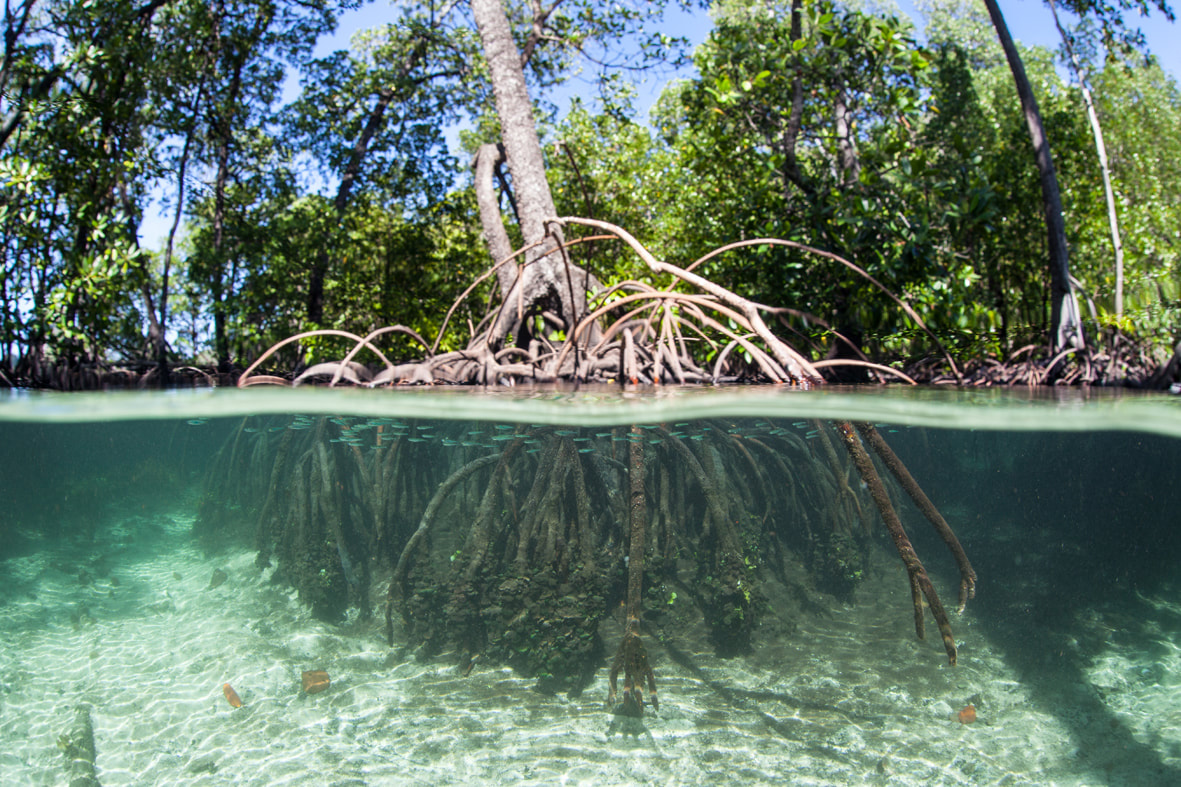
Aside from kelp, mangroves are the other superhero in the fight against climate change and the effort to protect our waters and ecosystems. They store carbon and protect all kinds of organisms, including algae, sea sponges, crabs, and shrimp who make their home in the intricate root mesh. Their intricate roots are a vital living nursery for various coral reef fish and their upper branches are the nesting spot of choice for many coastal birds. Mangrove swamps also protect coastal areas from erosion and the storm surges often associated with severe storms and hurricanes. We are planting mangroves, in Madagascar, Mexico, Indonesia and Haiti. Our mangrove projects in Mexico specifically target protection for Californian Grey Whales and Olive Ridley Sea Turtles.


We are also fighting coral bleaching and coral reef decline, so coral reefs can continue to function as vital engines of life and growth in the oceans.
|
We are supporting agroforestry. Agroforestry, particularly the planting of trees and mangroves near coastlines, can significantly protect marine life by providing habitats, stabilising shorelines, and improving water quality, acting as natural buffers against erosion and wave action.
We support the Blue Commons and the movement to rescue the biodiversity and economy of the seas.
|
|
We are educating and promoting. The seas and their inhabitants can’t speak for themselves, have no representation at climate change conferences or the UN. So, we are spreading the word, pushing the UN and other organisations to take bigger, bolder strides, and educating students around the world… and people like you.